March is when people buy a tent they will use once and forget the stake that would have saved the tent they own. This checklist is the small gear that makes an existing setup less miserable in spring mud and early dark. Dollar and pound bands are separate approximations. It is a research list, not a trip report. The hands-on box on this page stays empty until someone on this site sleeps in the gear and says so.
Who it is for
You already have a shelter, or you have chosen one from the US tent guide or the UK family tent guide and you are not using this page as a substitute. You camp from a car. You are not gram-counting on a trail.
If the trip is mostly cooking, the pot and coffee guide matters more than a second tarp. If the trip is mostly sitting, start with chairs and a table.
What to check on last year’s kit
Pitch the tent at home or in the yard before you buy around it. Look for a broken pole, a stuck zipper, and a groundsheet that is already a sieve. A footprint does not repair a floor with a hole under the sleeping area. It spreads wear and keeps mud off.
Count stakes. Spring ground is soft until it is rocky. The set that came with the tent is often the first thing to replace.
Find the lantern and charge it. A dead lantern in March is a dark camp, because the evenings are not summer evenings yet.
The shortlist
Pick 1
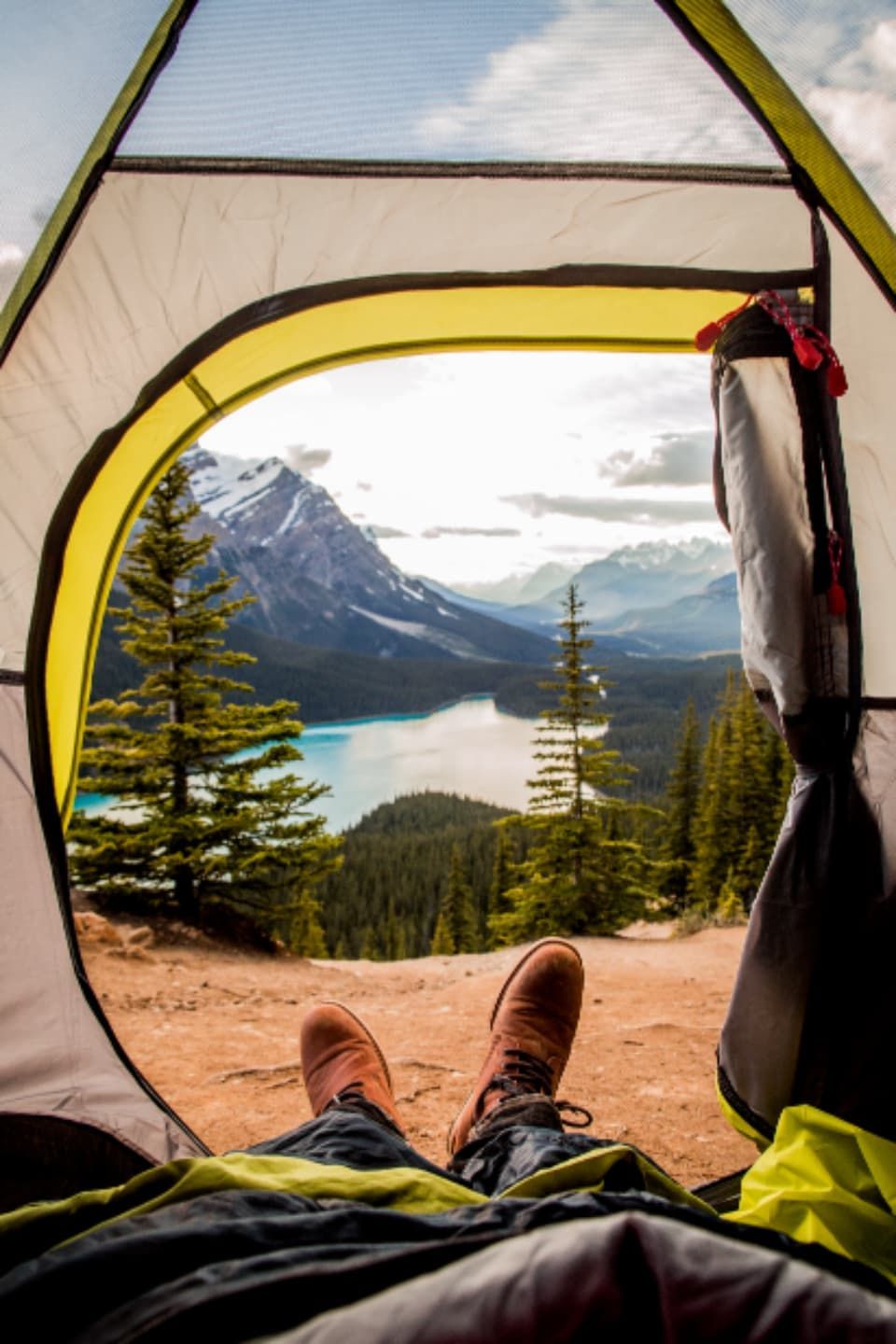
Rectangular tarp with reinforced corners
Best for. A cooking cover or a ground cloth
In March, a tarp is the piece that lets you cook when the tent is still wet from last year. Buy reinforced corners or do not bother.
Look for
- About 3 by 3 m or 3 by 4 m
- Real corner patches
- Enough tie-out points
Strengths
- Shade or rain cover in minutes
- Doubles as a pack sheet
Limits
- Thin polythene shreds
- No poles included
A tarp is not a tent. It needs a ridge and stakes.
$18–35 / £15–30
Check the current price.
Check price for Rectangular tarp with reinforced corners (opens in a new tab)
Pick 2
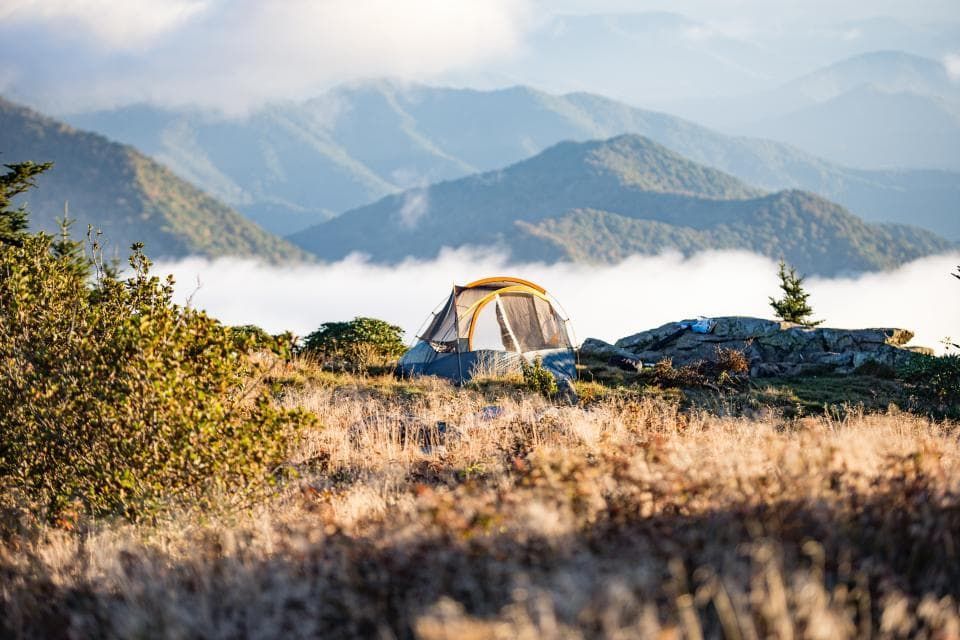
Mixed stake set, Y-beam and a few nails
Best for. Replacing the soft pegs that bent last year
March ground is soft in some places and frozen in others. A mixed set is the practical refill before the first trip.
Look for
- A length you can actually drive, 18–23 cm
- A hook that holds a guy line
- A small mallet or a rock plan
Strengths
- Y-beams hold in ordinary soil
- Cheap insurance
Limits
- They bend in shale
- Nail stakes are for hard ground only
Do not use bent pegs and then blame the tent.
$10–18 / £8–15
Check the current price.
Check price for Mixed stake set, Y-beam and a few nails (opens in a new tab)

Pick 3
Rechargeable camping lantern
Best for. Evenings when you are done with disposable batteries
Replace last year's battery-eater before the season. Dimming matters more than a huge lumen number you will never use at the table.
Look for
- A stated lumen range you can dim
- USB charging
- A hook
Strengths
- Dimmable is the feature that matters
- One lantern lights a table
Limits
- Runtime claims are optimistic
- A dead lantern with no battery backup is dark
Carry a small backup light anyway.
$15–30 / £12–25
Check the current price.
Check price for Rechargeable camping lantern (opens in a new tab)
Pick 4
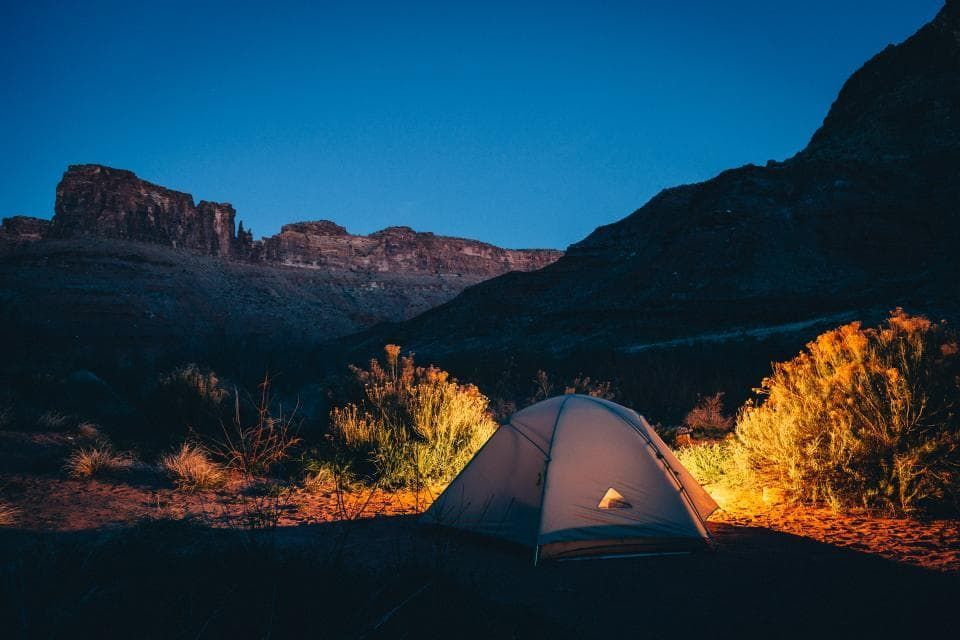
Sleeping-bag liner, cotton or fleece
Best for. A bag that is a little cold or a little grimy
March nights surprise people. A liner is the cheap layer. If you sleep cold, it helps. If you need a winter bag, it will not substitute.
Look for
- A shape that matches your bag, mummy or rectangle
- A fabric you will wash
- Pack size you have room for
Strengths
- Adds a bit of warmth
- Washes more easily than the bag
Limits
- Not a winter system
- Fleece is bulky
A liner does not turn a summer bag into a freezing-night bag.
$12–25 / £10–22
Check the current price.
Check price for Sleeping-bag liner, cotton or fleece (opens in a new tab)
Pick 5
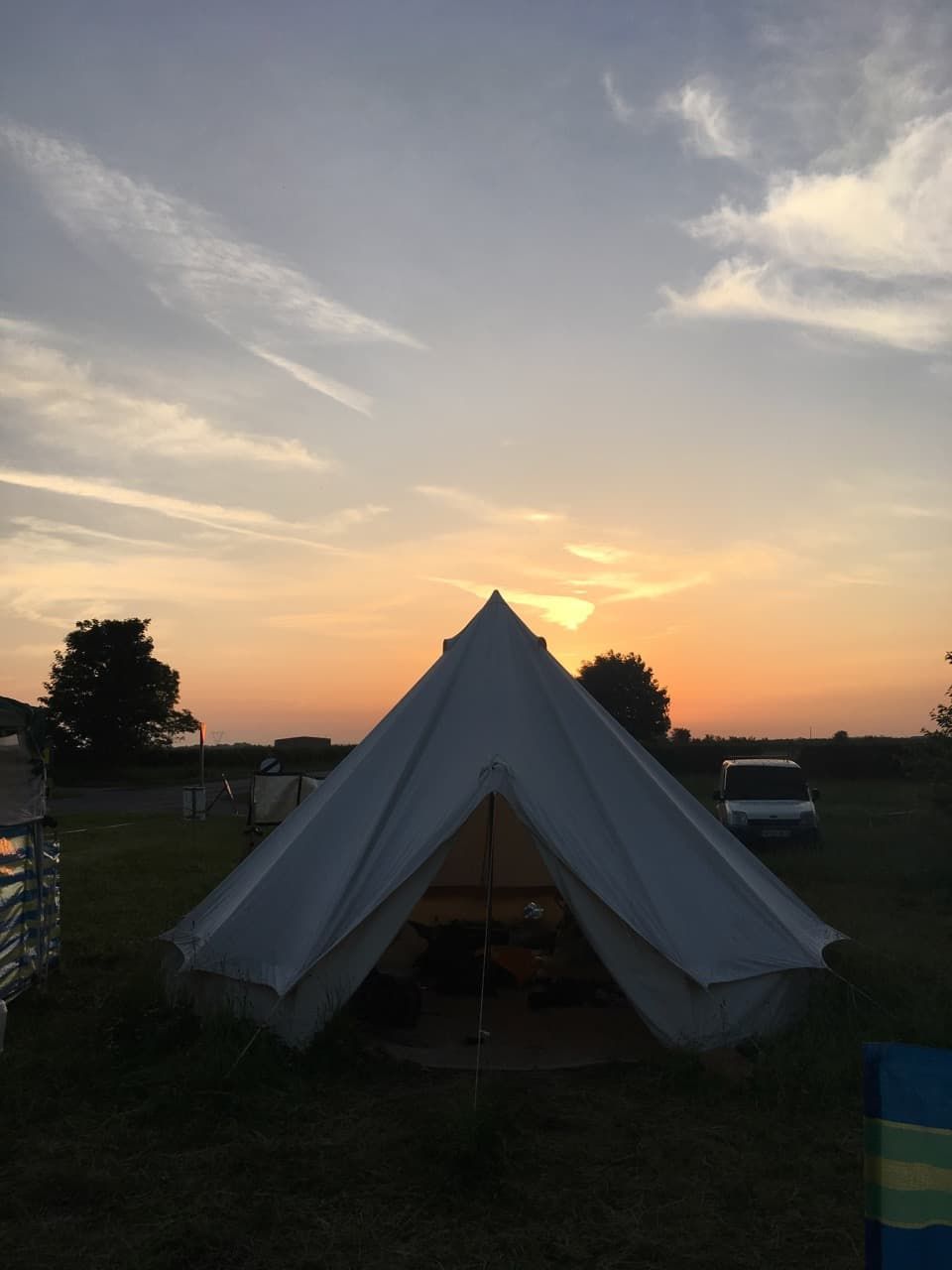
Dry bag, 10–20 litres
Best for. Clothes you want dry even if the tent is not
One honest dry bag is more useful in a wet spring than a bundle of packing cubes. Roll it properly or it is a bucket.
Look for
- A roll top you can actually roll three times
- A stated litre size
- A strap if you will carry it
Strengths
- Keeps a spare layer dry
- Doubles as a stuff sack
Limits
- Not a dry suit
- Cheap seams still wet out under pressure
Test it in a sink before you trust it with a sleeping bag.
$10–20 / £8–16
Check the current price.
Buy stakes if yours bent. Buy a footprint if you are keeping the tent and the size matches that tent, not “a tent.” Buy the lantern if you do not have a dimmable one. The tarp is for a kitchen or a sitting spot, not a second roof you will not guy out. The dry bag is for the clothes you refuse to find wet. Skip the dry bag if you already own one that seals.
What not to buy in the preseason rush
A new tent because the photo is greener than yours, unless the old one failed the yard pitch. A stove you do not know how to use. A sleeping bag from a listing with no temperature standard you can read. Treat comfort ratings on no-name bags as unknown. Also skip heaters for inside a tent. That is a carbon monoxide warning, not a product preference.
Overseas shipping can miss a trip. If the camp is dated, buy stakes and a lantern from a local shelf. The general timing issues are in the ordering guide.
A weekend packing list that is not a shop
Shelter you have tested, stakes, a footprint if it matches, sleeping kit you trust, a way to cook you already understand, water, a lantern, rain layers, and a bag for food that is not the dry bag full of socks. The shopping is done when those exist. More shopping is a hobby.
Common questions
Is March too early to buy?
For stakes, a lantern, and a footprint, no. You can look at them in daylight. For a tent you have not pitched, yes, it is too early to replace it.
Do UK and US springs need different gear?
The mud is the same idea. Check the stake against your ground, and use the price band for the market you pay in.
Can the tarp replace a footprint?
No. A tarp over a living area and a groundsheet under a tent are different jobs. Using one random sheet for both is how you run out of the right size.